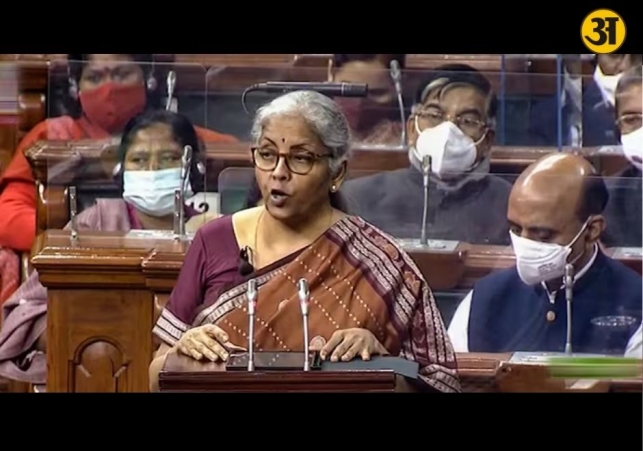
Sitharaman delivered India’s longest Budget speech
Nirmala Sitharaman holds record for longest Union Budget speech in India
Finance Minister Nirmala Sitharaman is preparing to present her ninth consecutive Union Budget on February 1, marking another important moment in India’s parliamentary and economic history. The upcoming Budget will outline the government’s financial plans and policy direction for the financial year running from April 2026 to March 2027.
This year’s Budget presentation is also special because it will be delivered on a Sunday, something that has never happened in independent India before. Traditionally, Union Budgets are presented on working days, making this schedule change notable.
The Union Budget is one of the most important annual events in Parliament as it details how the government plans to raise revenue and spend money across sectors such as infrastructure, health, education, defence, agriculture, and social welfare. Investors, businesses, and citizens closely watch the announcements because they affect taxation, development spending, and economic policies.
Economists expect the 2026 Budget to continue focusing on economic growth while maintaining fiscal discipline. The government is likely to balance spending on development projects while managing debt and global economic challenges, including trade pressures and international market uncertainties.
In recent years, the government has taken steps such as lowering taxes for certain income groups, increasing infrastructure spending, and supporting industrial and digital growth. These measures have helped India maintain economic momentum despite global challenges.
Focus areas for budget 2026
Experts expect capital expenditure to remain a key focus in the upcoming Budget. Capital expenditure refers to government spending on building long-term assets such as roads, railways, ports, airports, power projects, and urban infrastructure.
Over the last few years, the government significantly increased investments in infrastructure to create jobs and encourage private companies to invest in new projects. Infrastructure development is considered essential for boosting economic activity and improving logistics and connectivity.
ALSO READ: Venezuela opens oil sector to private companies under new law after political upheaval
ALSO READ: Trump warns Iran next attack will be far worse if no nuclear deal is reached
For the coming financial year, analysts expect continued investment in sectors such as railways, renewable energy, defence manufacturing, urban transport systems, and power transmission networks. Support for state governments through interest-free loans for infrastructure projects is also expected to continue.
Another important focus area may include strengthening domestic industries and encouraging private investment. Measures to improve manufacturing, exports, and job creation are often key parts of Budget announcements.
The government is also expected to address concerns related to inflation, employment opportunities, and economic recovery after global slowdowns. Businesses and investors will look for policies that improve ease of doing business and encourage economic stability.
Record for longest budget speech
Apart from economic discussions, Budget presentations also attract attention for their historical records. Finance Minister Nirmala Sitharaman currently holds the record for delivering the longest Budget speech in India’s parliamentary history.
In 2020, Sitharaman’s Budget speech lasted for 2 hours and 42 minutes, making it the longest speech delivered by a finance minister during a Budget session. The speech included major announcements such as a new income tax regime and the proposed initial public offering of Life Insurance Corporation (LIC).
During the speech, Sitharaman reportedly felt unwell, and Lok Sabha Speaker Om Birla completed the final part by reading the remaining pages. Even so, the speech had already set a record for duration.
Before this, Sitharaman had also delivered a lengthy speech in 2019, which lasted 2 hours and 17 minutes, making it the second-longest speech at that time. However, in contrast, her interim Budget speech in 2024 was much shorter, lasting only 56 minutes, making it the shortest speech of her tenure as finance minister.
When measuring speeches by word count rather than duration, former Finance Minister Manmohan Singh holds the record. His 1991 Budget speech contained approximately 18,650 words, making it the longest Budget speech in terms of written length. That Budget is remembered as a turning point in India’s economic reforms.
The second-longest Budget speech by word count was delivered by former Finance Minister Arun Jaitley in 2018, containing around 18,604 words.
On the opposite end, the shortest Budget speech ever recorded was delivered by Hirubhai M Patel in 1977 during an interim Budget. His speech reportedly contained only about 800 words, making it extremely brief compared to modern Budget presentations.
Budget speeches have evolved over time, often becoming longer as governments include detailed policy explanations and economic measures. However, modern technology and digital documents now allow ministers to keep speeches shorter while publishing detailed Budget documents separately.
As Finance Minister Sitharaman prepares for her ninth Budget presentation, attention remains on both the economic measures she will announce and the historical context surrounding Budget speeches. While it is unclear how long this year’s speech will run, expectations remain high as citizens, businesses, and markets await key policy decisions that will shape India’s economic path in the coming year.
Related News